Sunday School #22: Mindset, strategy, and tools for learning
Happy New Year! 🎉
How has 2020 been to you? Even if it's been a shitshow like it has been for many, we have to realize everything has its bright side.
For me, 2020 was when I decided to leave the corporate rat race and start teaching online. Since September, I've taught dozens of hours online and been building a community in the meanwhile.
That has been possible because I started this newsletter in May, wanting to talk about how to become better at learning. While I left university almost ten years ago, I realized that learning is the core activity of many knowledge workers. Over the years, I've noticed that knowing how to learn new knowledge and skills quickly is a competitive advantage, and I want to help others cultivate this advantage.
Since starting this newsletter, I've launched RoamStack and quit my job to work on another knowledge project—which I announce at the end of this newsletter. Everything I do now revolves around sharing what I know and learning new stuff quickly to teach it. Learning and teaching are my life now, precisely as I always wanted.
This edition is a reflection of what I've been learning and what I'll be teaching. I mostly point to ideas that I will flesh out during this year while teaching others and learning from them.
In this newsletter:
- My learning and building plans for 2021;
- How we learn versus how we think we learn;
- How to remember what you read in books;
- How to start an ultralearning project;
- How to make sense of information;
- Announcing Learning Worker Club.
New on Ramses.blog
🏗 What I'm learning and building in 2021
Instead of an annual review to reflect on the previous year, I'm starting this year by publicly declaring what I'm learning and how I will approach these skills.
The three skills I'm focusing on this year are writing, sketchnoting, and web development. Using my system to drive my mindset, strategy, and execution, I'll be learning in public and share what I know and discover.
Do you feel motivated to also learn in public? Start by sharing what you'll learn and how you'll learn it, preferably on a platform like Twitter. Feel free to tag me, and invite your followers to chime in on what you should learn. I did the same and received tons of wonderful advice to tackle my ultralearning project to improve my writing skills:
Learning from the web
📺 How We Learn Versus How We Think We Learn (Robert Bjork)
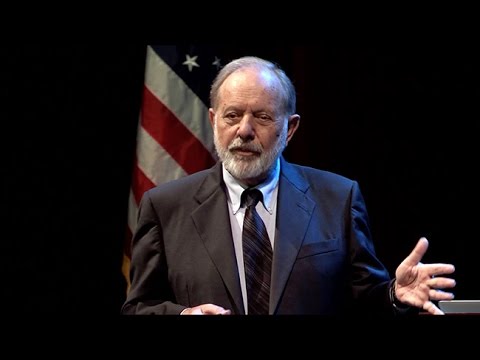
Sunday School reader Jan recommended this fantastic talk by Robert Bjork, Distinguished Research Professor at UCLA.
Bjork is an important voice in the learning community; through his research, we now know that how most people learn is not the most effective way of learning. The ideas he presents in this lecture are the foundation of popular books as Make It Stick and Ultralearning. Every piece of counterintuitive advice is supported by loads of proof, making this video a great introduction to the world of learning better.
📚 How to Remember Everything You Want From Non-Fiction Books (Eva Keiffenheim)
Another recommendation by Jan solves part of the puzzle of incorporating books in your learning process.
This article touches on how we acquire, store, and retrieve knowledge. It then shows how we can use several science-backed techniques to remember what we read: elaboration, retrieval, spaced repetition, interleaving, self-testing.
Books are an excellent source for learning, but using them well is a challenge. I'm sure that if you apply the techniques that Eva shows in this article, books will soon become your go-to resources to learn anything.
🎓 How to Start Your Own Ultralearning Project (Part One) (Scott Young)
In January, I'm doing an ultralearning to boost my writing skill. I discovered the ultralearning technique when I picked up Scott Young's book with the same title in 2019.
Ultralearning projects are highly-directed and aggressive learning projects, often with tight deadlines. This type of learning project is a challenge because you dive into the hard parts first and adjust as you see fit. But challenging yourself with the difficult parts isn't the entire story; part of the success results from planning and reflecting on your learning strategies, which in itself is an act of metalearning.
In this article, Scott Young explains why you should do ultralearning over conventional learning and how to start designing your learning challenge. In part two, he dives into the logistics of the actual learning.
📖 How to Make Sense of Any Mess (Abby Covert)
When I started to talk about the idea of becoming a learning worker, several Twitter followers and newsletter subscribers asked if I was familiar with the field of Information Architecture. As I wasn't, the repeated question piqued my interest, and I fell into a small rabbit hole. I blame this delightful little (free) book.
Abby Covert is an Information Architect who wrote How to Make Sense of Any Mess. In it, she explains why and how to think about structuring information for sharing.
As modern knowledge workers who learn for a living, sharing what we know is crucial. We can learn many principles from the field of Information Architecture, each helping position ourselves as experts in our field while helping it move forward.
A highly recommended read!
Announcing Learning Worker Club
In Sunday School #16 (October 11, 2020), I announced that I quit my day job and worked on a project to help people transition from being knowledge workers to learning workers. Now, the time has come to unveil what I've been working on.
While not open yet, I already want to announce Learning Worker Club. The idea is fairly simple, and nothing is set in stone (because it'll be community-driven): it's a club for professionals who earn a living by learning new skills and knowledge quickly. Compare it to a community of practice, the practice being metalearning.
In the coming weeks, I'll be busy writing content for the blog of 'the Club,' gaining the attention of like-minded professionals seeking an online home to improve their learning skills. To combine the launch of this knowledge project with improving my writing skills, I'll be writing and publishing a daily atomic essay in January about what it means to be a professional learner.
Keep an eye on my Twitter account for the essays and an eye on this newsletter for information on how to get involved with Learning Worker Club.
Closing words
That's it for the first edition of this year! I hope you find the resources useful and will take the time to go through them. Not only will they help you become a better learner, but they will also help you become a better sharer of knowledge.
Do you have a recommendation or question in the meanwhile? Never hesitate to hit reply and sling an email my way, or hit me up on Twitter.
—Ramses
Sunday School
Happy snowy Sunday! 2021 is trying hard to be crazier than 2020. More reason to keep sharpening our learning tools to deal with uncertainty. I've forced myself to not watch the news and instead keep on building. In two weeks, I'll launch Learning Worker Club and there's enough preparation left to do. In the next newsletter, you'll be the first to see what I've started, before launching on Monday. Apart from building RoamStack and Learning Worker Club, I've kept busy by writing every day....
Happy Sunday from rainy Amsterdam! And a special welcome to all 51 new subscribers who will test out the reading guides I'm creating for the books Make It Stick, Ultralearning, and How to Take Smart Notes (see the end of this newsletter if you don't know the project). Today's Sunday School is all about deliberate practice, a way of intentionally practicing that maximizes learning. While challenging to do, it's a crucial tactic to reach expert-level performance in a field. Deliberate practice...
Happy Sunday! Being a knowledge worker with ADHD, it can be extremely difficult to find the clarity and focus to see things through to the end. My mind jumps from topic to topic, getting triggered by what I’m trying to focus on. On the flip side, when I do find focus, it tends to be hyperfocus. It’s not uncommon for me to sit 12 hours straight, working on a project, forgetting everything and everyone around me, even ignoring bodily functions like thirst and hunger. By exploring different...